FOOD & LOCAL DISCOVERIES · BLOGGSANDCO
11 exotic Thai fruits to try on your next trip
A market visit can begin with a colour, a fragrance or a fruit you have never seen before. From purple mangosteen to bright pink dragon fruit, this guide helps you recognise eleven favourites, understand their textures and know how to start tasting.
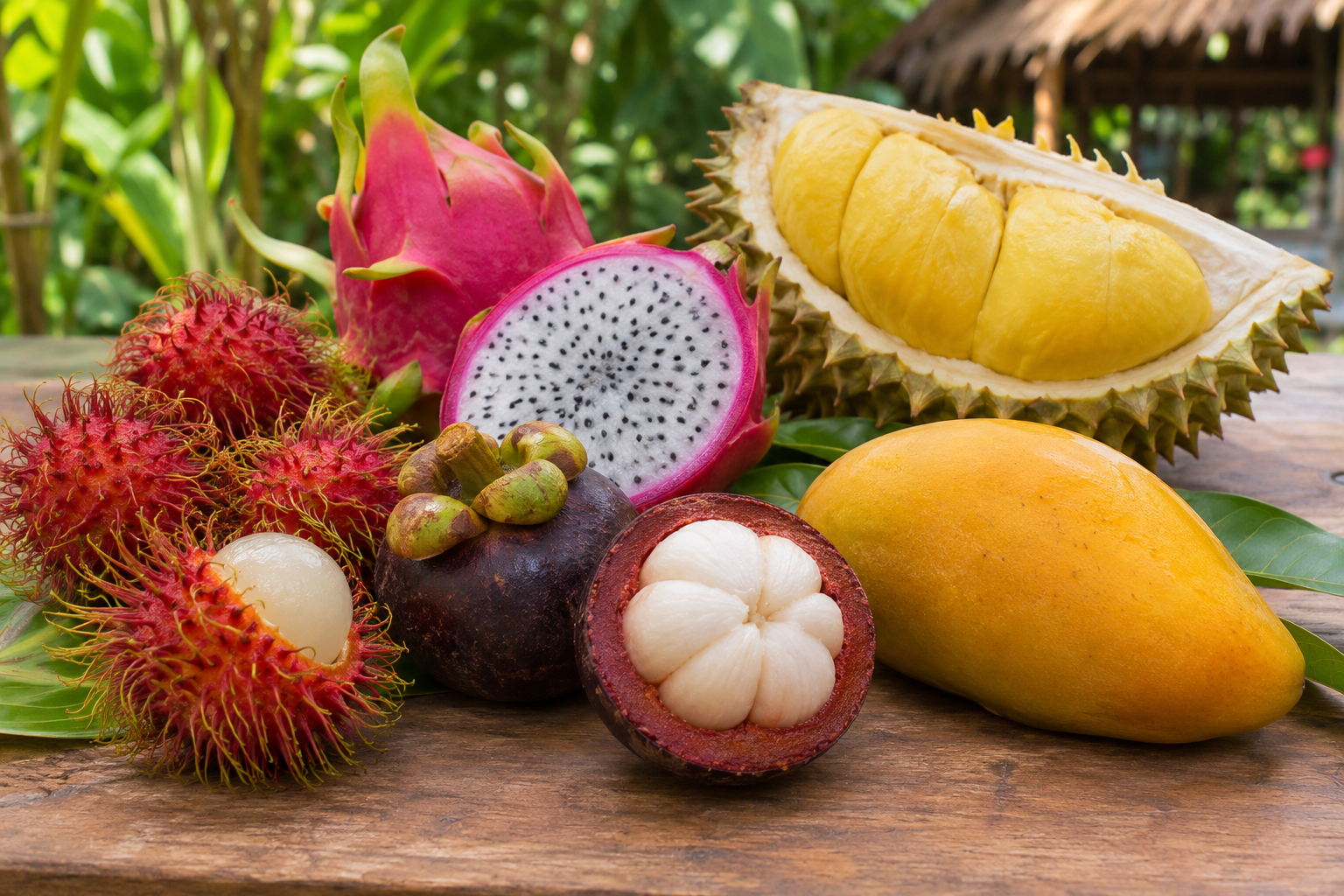
Start with a small taste
Choose a few fruits that look good that day and ask the seller which are ready to eat. A small prepared portion makes an easy introduction. Market prices may be per kilogram, per fruit or per pack, so confirm the unit and total before buying.
Availability changes with the growing region, variety and weather. Ask what is local and in season rather than expecting every fruit to be at its best in the same month.
1. Mangosteen · mangkhut
Purple on the outside, soft white segments within. Mangosteen brings a balance of sweetness and gentle acidity, making it an easy starting point if you enjoy juicy fruit.
How to try it: Press the rind gently around its middle and lift off the top. Eat the white flesh and leave any firm seeds. Keep the purple rind away from pale clothes.
2. Durian · thurian
The spiky shell and powerful aroma make durian hard to overlook. Inside, its rich yellow flesh is creamy and quite unlike a crisp apple or a juicy orange. Varieties and ripeness change the experience.
How to try it: For a first taste, buy a small prepared portion and ask the seller about the texture. Check your hotel and transport rules before carrying it with you.
3. Mango · mamuang
Ripe mango offers fragrant golden flesh; green mango gives a firmer, sharper bite. The same fruit can feel like a different snack depending on the variety and when it is picked.
How to try it: Try ripe slices on their own before adding sticky rice and coconut sauce. If you buy green mango, taste it before adding the chilli, salt and sugar dip.
4. Rambutan · ngo
A red shell covered in soft hair-like spines hides translucent white flesh. Rambutan is juicy and sweet, with a firm seed at its centre.
How to try it: Split the skin gently around the middle, peel it back and eat the flesh around the seed. Discard the seed and shell.
5. Dragon fruit · kaeo mangkon
The pink skin and leafy scales are the showpiece; the flesh is usually milder than the outside suggests. White or red flesh is dotted with tiny edible black seeds.
How to try it: Cut the fruit lengthways and scoop the flesh with a spoon, or peel the skin away and slice. Try it chilled when you want a lighter snack.
6. Pineapple · sapparot
A familiar fruit with a lively sweet-and-tart balance. Prepared pineapple is convenient when you want a few fresh pieces while exploring a market.
How to try it: Ask for a small cut portion. Try it plain first, then decide whether you want the accompanying seasoning.
7. Banana · kluai
Thailand grows different banana varieties, from small, sweet fruit to types used in cooked snacks. A market stall can be a good place to notice how size and texture vary.
How to try it: Try a ripe banana fresh, then compare it with grilled banana or a banana dessert on another day. Ask which variety is being sold.
8. Guava · farang
Often sold while still firm and crisp, guava has a clean flavour and a crunchy bite. Its pale flesh makes a useful contrast to softer tropical fruit.
How to try it: Try a freshly cut wedge plain. Dips can be sweet, salty or spicy, so add a little at a time.
9. Jackfruit · khanun
A very large fruit with textured green skin. The edible golden bulbs inside have a sweet aroma and a firmer, chewier texture than mango.
How to try it: Buy a small prepared pack for an easy first taste. Eat the yellow flesh and remove the large seed from each bulb.
10. Rose apple · chomphu
Bell-shaped and crisp, rose apple is more about a refreshing, watery crunch than intense sweetness. Colours vary from pale green to pink and deep red.
How to try it: Wash it well, cut it open and remove the centre if needed. Enjoy a few slices as a fresh contrast to richer food.
11. Young coconut · maphrao on
Young coconut offers lightly sweet water and tender white flesh inside a firm shell. It is a drink and a snack in the same fruit.
How to try it: Ask the seller to open it. After drinking the water, use a spoon for the soft flesh, or ask whether the shell can be split safely.
Make a market visit part of the day
Leave room to browse instead of turning fruit tasting into a checklist. Choose one unfamiliar fruit, share a small portion and take note of the name if you enjoy it. Read our food guide and market guide for more ways to build a day around local flavours.
Fruit names and further reading
Fruit names: Thailand Department of Agricultural Extension. Growing regions and seasonal context: Tourism Authority of Thailand fruit guide and TAT Southern MUST TASTE Thai Fruits. English spellings of Thai names vary.
Find your next Thailand adventure

Plan a relaxed 10-day route with Bangkok, one coast and a return buffer. Decide what to book and where to leave room for discovery.

Road access or arrival by boat? Compare beach time, transfers and the feel of each base before you choose your Krabi stay.

Compare the stops, time on the water and inclusions, then choose a Krabi island trip that fits your pace and budget.
Destination photographs, credited in each linked story. Display crops may vary.
More Thailand, at your own pace.
Home · Travel stories · Contact bloggsandco
© 2026 bloggsandco